
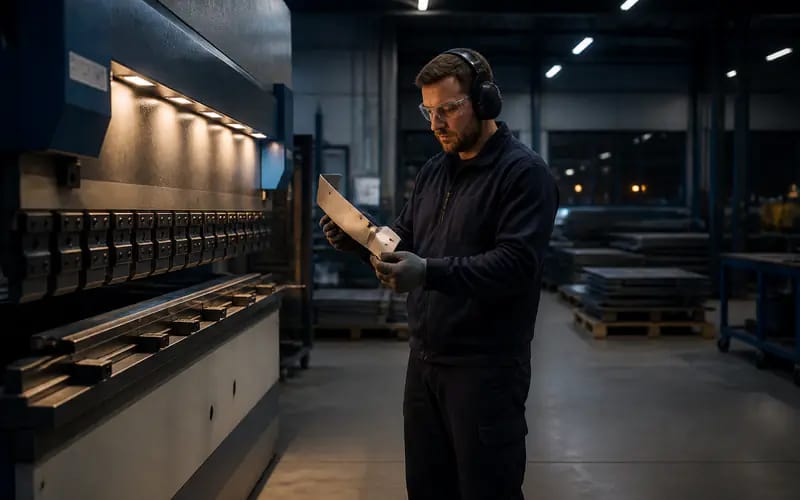
A recent article on DKM Sheetmetal makes interesting reading. It refers to the £600,000 of new automation being used for “continuous running”. The original is the Stroud News and Journal piece on DKM Sheetmetal’s 24-hour production, and it’s worth reading in full.
Who works nights and what will be the cost of the power? It is the people that have enabled DKM to get to where it is today according to MD Steve Hearn. Thus the first question for round-the-clock Sheet Metal Fabrication should be the shift rota.
Continuous running is a fair ambition
It’s common for companies to want to get back to long hours on expensive plant in order to earn a return on investment. The machine only earns while it’s running – overnight it’s idle and earning nothing for the owner of the equipment. DKM Sheetmetal have grown from a six-strong workforce to 45 people.
Faster machines are only half the story
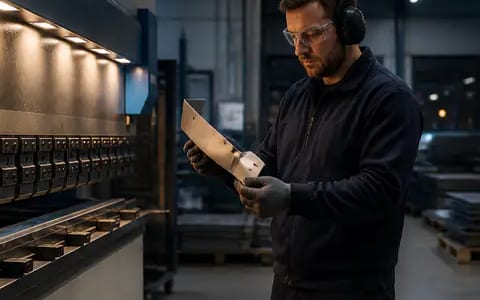
The work of a night shift operative extends beyond that of pressing buttons on a machine continuously throughout the day. As with other forms of continuous working, planned maintenance needs careful scheduling as there are fewer natural pauses within which to undertake such work, which helps avoid unplanned downtime.
Shift patterns carry their own risks
These types of problems can hide in handover notes left for night shift workers, for example a worn tool or a change in the production program. The management of shift work for most types of work is detailed in HSE’s guidance for employers on managing shift work. So night working is not new and needs to be formally managed as part of overall shift design.
Electricity costs move with run-hours
Also important is the effect on energy costs. A laser or press room running through the night increases the normal energy costs based on run-hours. However, help is at hand in the form of the British Industrial Competitiveness Scheme, whereby the electricity costs of manufacturers (in eligibility) can be cut by up to 25% for up to 3 years. Registration has to close on 30 November with support starting on 1 April 2027. Check the eligibility criteria as these will outline exactly who can benefit.
Plan the people and the power first
Continuing to operate on extended hours will reward companies that have thought through the associated changes to shift designs and energy costs rather than just buying the fastest new machines. The British Industrial Competitiveness Scheme electricity rebate of up to 25% closes for registration on 30 November 2026 with help starting to be distributed by April 2027.

 0
 0