Before remediation work can start, a considerable amount of groundwork has to take place. This will involve you and/or your developers reviewing the Site Investigation Reports and the conceptual site model. In addition to this, it is advisable to check the conceptual site model against the most up to date data to ensure that the model has not changed since it was drawn up months/years previously. This is particularly important where there has been site activity, i.e. building etc., and/or changes to the site drainage and/or additional boreholes.
Reviewing The Site Investigation Data
The conceptual site model, as outlined in the site investigation reports, needs to be checked against the latest information before any remediation work commences. Plans have probably been drawn up months, if not years before, and by that time there could have been a change to the site, i.e. building, changes to the drainage etc. Even boreholes already drilled on the site will not give a complete picture of the contamination.
Mapping The Full Extent Of The Plume
In addition to the initial boreholes that identify a contaminated site, further investigation is required to more accurately identify the extent of contamination. This process of delineation monitoring includes further boreholes with sampling of the groundwater at different locations around the site to identify the full extent of the contamination (in plan and depth). Failure to identify the full extent of contamination and include it in the remediation area (the ‘treatment zone’) results in the contaminated groundwater outside of the defined area not being treated and additional work required to remedy the situation.
Checking For Underground Services
Underground services, such as water, gas, electricity, sewerage, telecommunications cables, need to be located prior to any penetration of the ground. This is usually carried out by contacting the relevant service companies, such as UK Power Networks for electricity cables, and also by a physical site investigation using cable and pipe detection equipment. Penetrating a live gas main or even drilling into a live electricity cable could result in serious injury or even death, and could cause a project to come to a standstill for weeks or even months whilst repairs are carried out and investigations into how it happened are completed.
Carrying Out A Site-Specific Risk Assessment
As no two sites are alike, a generic method statement will not identify all the specific site risks. A site specific risk assessment should identify risks associated with ground gases in any excavations, confined space entry to wells or chambers and the risks from plant and vehicles on site. For sites adjacent to dwellings etc. the assessment must also consider the potential for vapour intrusion into nearby buildings and how workers on site can mitigate this whilst carrying out their work.
Installing And Checking Monitoring Wells
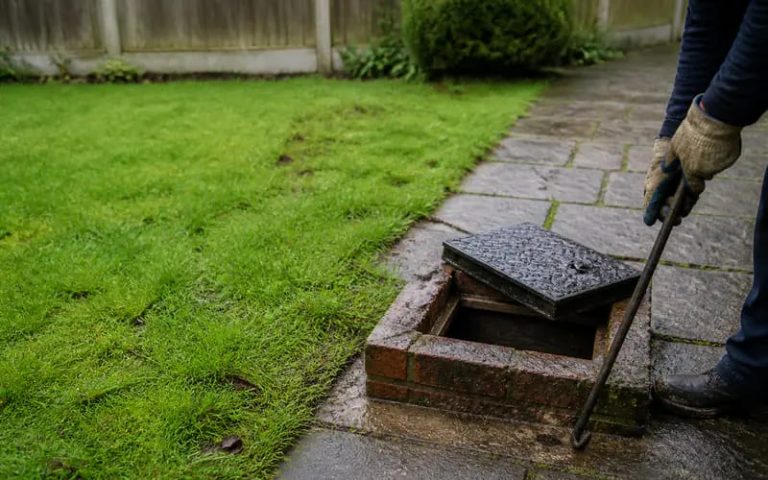
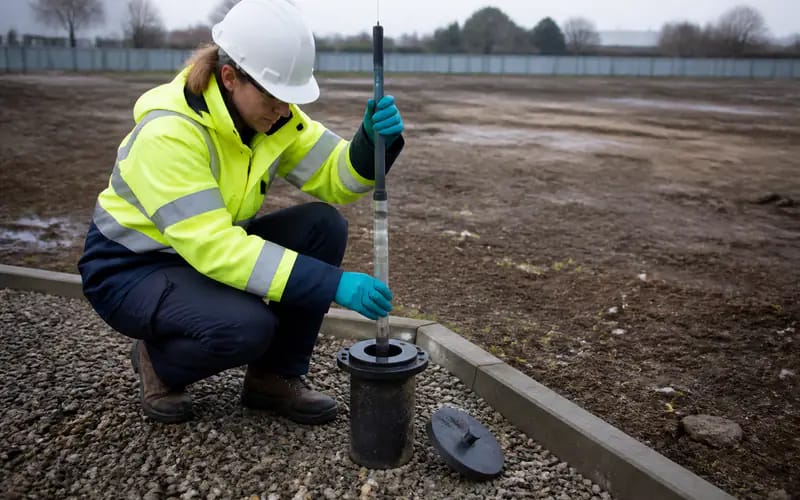
Reliable monitoring wells are essential for effective Groundwater Remediation schemes. Before any Groundwater Remediation work commences, the existing monitoring wells must be checked for damage, for example collapse or blockage by silt. In addition, any gaps in the monitoring well coverage must be filled with new wells. A number of baseline samples must be taken before any treatment is introduced to the groundwater to allow for natural fluctuations in the groundwater levels due to seasonal variations in rainfall, etc.
Planning Access, Welfare And Storage
Access for drill rigs and excavators to enter the site to start the works will be identified along with the location for site welfare. In addition, provision must be made for storage of site materials, excavation spoils and contaminated ground soils and also for the contaminated ground soils to be treated on site. On very confined urban sites it may be necessary to work in phases to allow works to progress in areas that can be closed off to allow access for other areas of the site.
A useful reference for Groundwater Remediation is Soilfix.
Agreeing What Success Looks Like
The verification criteria need to clearly set out the relevant concentrations for individual contaminants and how many clean monitoring results are required to verify site closure. In addition, site monitoring will need to be specified on an on-going basis post-remediation to verify the long-term efficacy of the remediation treatment(s) provided.
Understanding The Regulatory Backdrop
Groundwater protection in England sits under a clear regulatory framework, and it’s worth understanding the basics before work starts. Contaminated sites affecting or threatening groundwater often fall under scrutiny from the Environment Agency, and developers can check current requirements through guidance from the Environment Agency on protecting groundwater, which sets out how groundwater quality is assessed and protected during site works. Knowing which permits or notifications apply to your site avoids delays once the practical work is ready to begin.
All of this work needs to be done before any remediation equipment can be switched on. It’s a lot of groundwork but it’s all necessary to ensure that the remediation work is done properly the first time round.

 0
 0